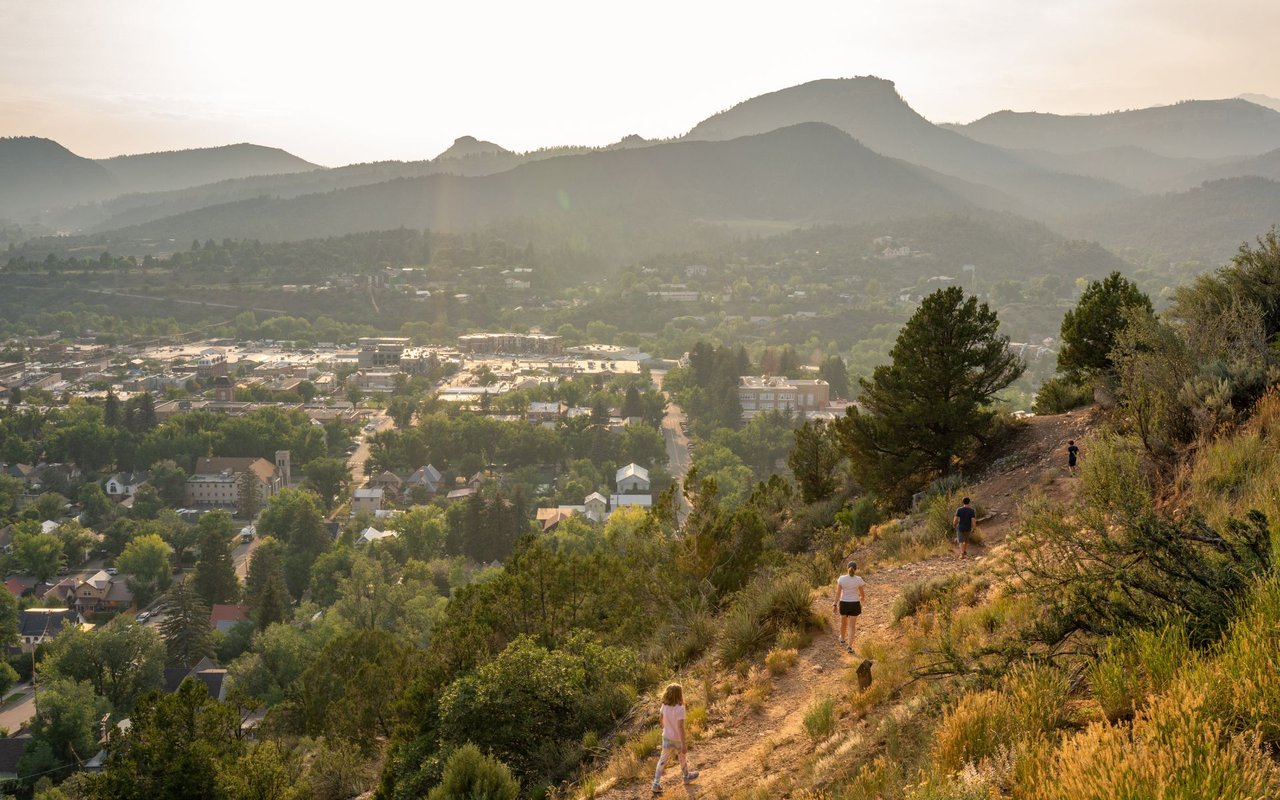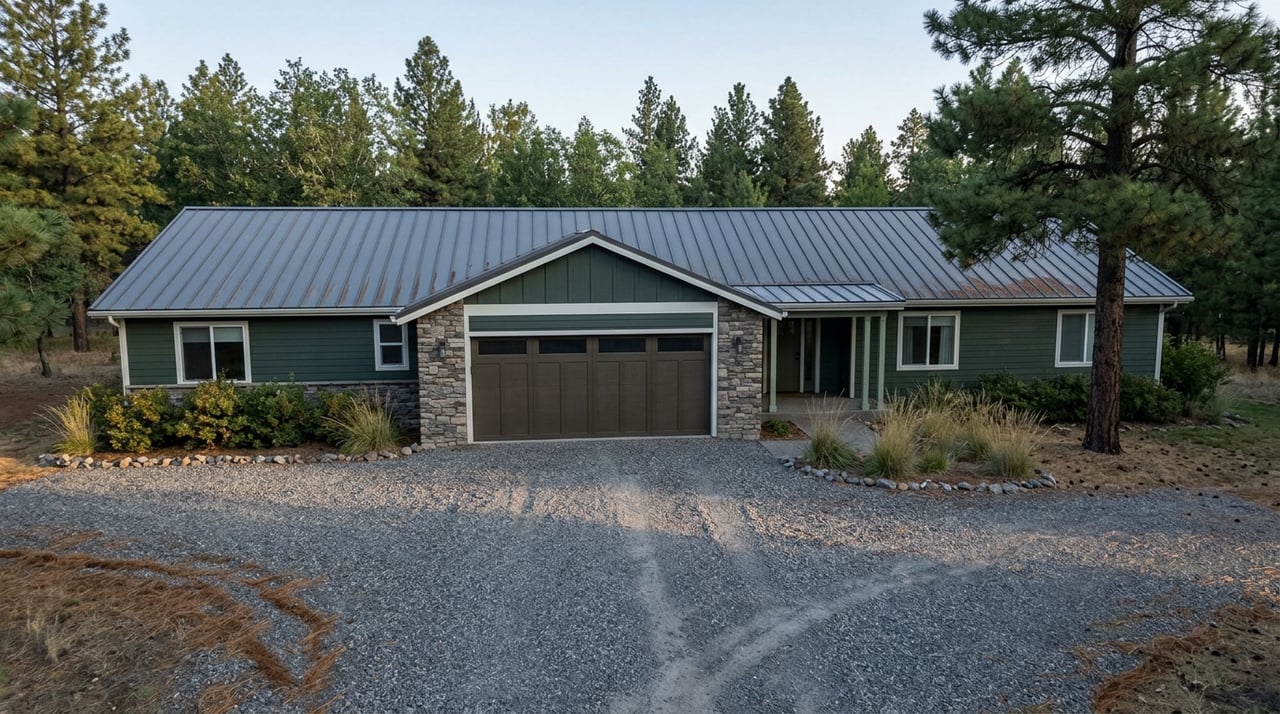
Drive up Twin Buttes Avenue in west Durango and you will pass a vacant half-acre lot listed in the low six figures, a spec home under construction with three levels and mountain views, and, a few hundred yards further, a stretch of ground that used to be Animas High School. That last parcel is where the comparison breaks down. It is planned to become 29 deed-restricted townhomes and duplexes that will never trade at whatever the market says they are worth, because the market is not what sets their price.
Both projects sit inside the same subdivision, share the same trail network, and will eventually answer to the same mailing address. But they are not the same product, and treating them as one neighborhood with one price story is where a lot of relocation buyers get their comps wrong.
The Custom-Lot Side Behaves Like You'd Expect
Twin Buttes started as a master-planned, in-city-limits community built around walkability, a working farm stand, and a stated commitment to what its developers call rural urbanism. On the market-rate side, that means buildable lots with no HOA dues, ranging from smaller parcels priced around $200,000 up to a newer phase off Tipple Avenue where the largest single-family build sites run up to 42,000 square feet. Home prices across the subdivision have historically spanned from the $500,000s into luxury spec builds well past $1,000,000, priced the way you'd expect any in-town parcel with view corridors and no HOA restriction to be priced: by lot, by builder, by finish level.
That is the version of Twin Buttes most portal searches surface. It is also only half the plat.
How a Deed Restriction Actually Works
The other half is Lightner Creek Commons, a 29-unit development of townhomes and duplexes planned for 271 Twin Buttes Avenue, the former Animas High School site. Twin Buttes of Durango donated roughly 3 acres of that land to the city as part of its affordable housing commitment, and in 2023 the city selected Elevation Community Land Trust, working with Tributary Development and modular builder Fading West, to build on it. The Durango City Council approved the conceptual plan in February 2025, and in January 2026 the city's Community Development Commission recommended the rezoning the project needs before it can break ground.
Here is the part that changes how you should read the pricing: Elevation Community Land Trust keeps ownership of the ground under every unit. Buyers purchase the structure and a long-term ground lease, not the land itself. That structure is what let the trust set a target price of $242,208 to $302,759 for two-bedroom townhomes at 100 percent of area median income when the plan was approved in February 2025, with a modest $100 monthly HOA fee, well under what a comparable market-rate two-bedroom would cost in La Plata County. City documentation on the project describes eligible buyers as households earning between 70 and 120 percent of the area median income.
The tradeoff is built into the deed. When an owner sells, the resale price is capped by a formula tied to the land trust agreement, not by whatever comparable homes are fetching down the street. The unit stays affordable for the next qualified buyer because the appreciation that would normally accrue to the seller is intentionally limited.
A deed-restricted home does not have a ceiling on how livable it is. It has a ceiling on how much equity it can hand back to you.
That is not a flaw in the program. It is the entire mechanism. A land trust trades upside for access, on purpose, for as long as the deed restriction runs.
Where the Money for the Affordable Side Actually Comes From
The two tracks are not just adjacent. They are financially connected. Twin Buttes pays the city a share of the real estate transfer fees generated by its market-rate sales, and those fees are earmarked for affordable housing. As part of the January 2026 rezoning agreement, the city committed $616,000 collected from those Twin Buttes transfer fees toward getting the project built, on top of the donated land itself.
In practical terms, every time a custom lot or spec home changes hands at market rate in Twin Buttes, a slice of that transaction is funding the deed-restricted homes being built a short walk away. It is a closed loop inside one subdivision: market-rate appreciation on one side subsidizes permanently capped pricing on the other.
Here is how the two tracks compare side by side:
| Market-rate Twin Buttes | Lightner Creek Commons | |
|---|---|---|
| Ownership | Buyer owns land and structure | Buyer owns structure, leases land from ECLT |
| Price basis | Lot size, view, finish level | Fixed by AMI formula |
| Recent price range | $200K (vacant lots) to $1M+ (luxury spec) | $242,208 to $302,759 (2BR) |
| HOA dues | None on custom lots | $100 per month |
| Eligibility | Open market | Household income 70 to 120 percent AMI |
| Resale | Sells at whatever the market bears | Capped by land trust formula |
What This Means If You're Comparing West Durango Prices
If you are researching West Durango and Twin Buttes comes up as a neighborhood to consider, the pricing you find on a portal search is going to reflect the market-rate side almost exclusively, because the land trust units are not marketed the same way and are not open to the general buyer pool. That is useful to know in both directions.
If you are comparison shopping at market rate, do not expect a nearby Lightner Creek Commons closing to function as a comp for your appraisal or your own resale math. It is a structurally different transaction, priced by a formula that has nothing to do with what the lot next door is worth.
If you are the kind of buyer who might actually qualify for the land trust program, the calculation is different again. You are trading long-term appreciation for a lower entry price and a fixed monthly cost, in a subdivision that otherwise commands market-rate premiums for its trails, farm stand, and proximity to downtown. That is a real tradeoff worth thinking through with someone who can walk you through what a ground lease means for financing, not just what the sticker price says.
Either way, the lesson holds for west Durango more broadly. A subdivision's median price is not always one number. Sometimes it is two mechanisms sharing a mailing address, and only one of them moves with the market.
Frequently Asked Questions
Will Lightner Creek Commons homes ever sell at market rate? Not under the current land trust structure. The ground lease and resale formula are designed to keep the units affordable for successive qualified buyers, which means the appreciation cap is a permanent feature of the deed, not a temporary restriction that expires.
Can I still buy a no-HOA custom lot in Twin Buttes? Yes. The market-rate side of the subdivision, including the newer phase off Tipple Avenue with build-ready lots up to 42,000 square feet, continues to sell independently of the affordable housing project. The two tracks operate on separate timelines and separate sales processes.
Does the land trust project affect financing on nearby market-rate homes? The two are legally and financially distinct transactions. A market-rate purchase in Twin Buttes goes through conventional financing and title just like any other in-city lot or home. The transfer fee that funds Lightner Creek Commons is collected by the city as part of the sale, but it does not change the underlying loan structure for the buyer.
If you are trying to figure out which side of a neighborhood's pricing story actually applies to the property you are looking at, that is exactly the kind of question worth a conversation before you write an offer. LiveInDurango works these submarkets closely enough to tell you which comps are real and which ones only look like it. Start your move: request a home valuation and let's talk about what West Durango actually costs right now.