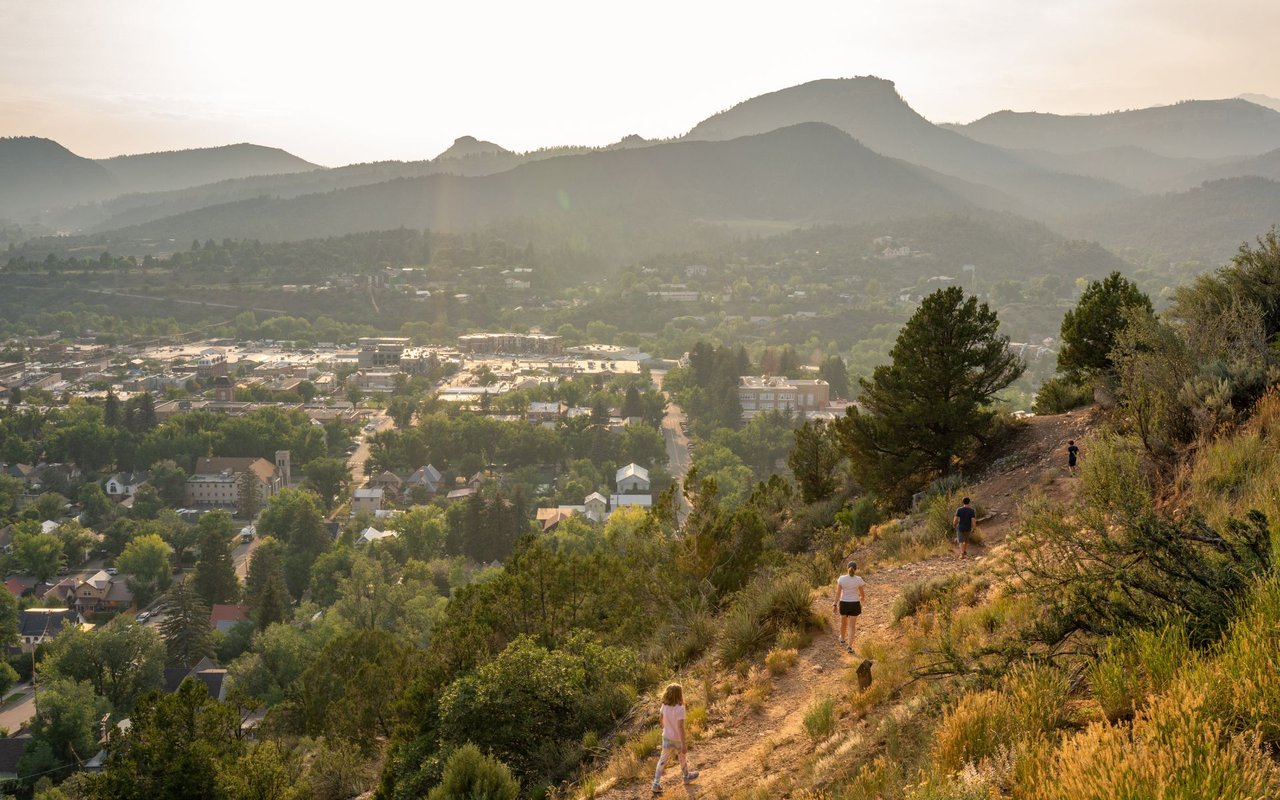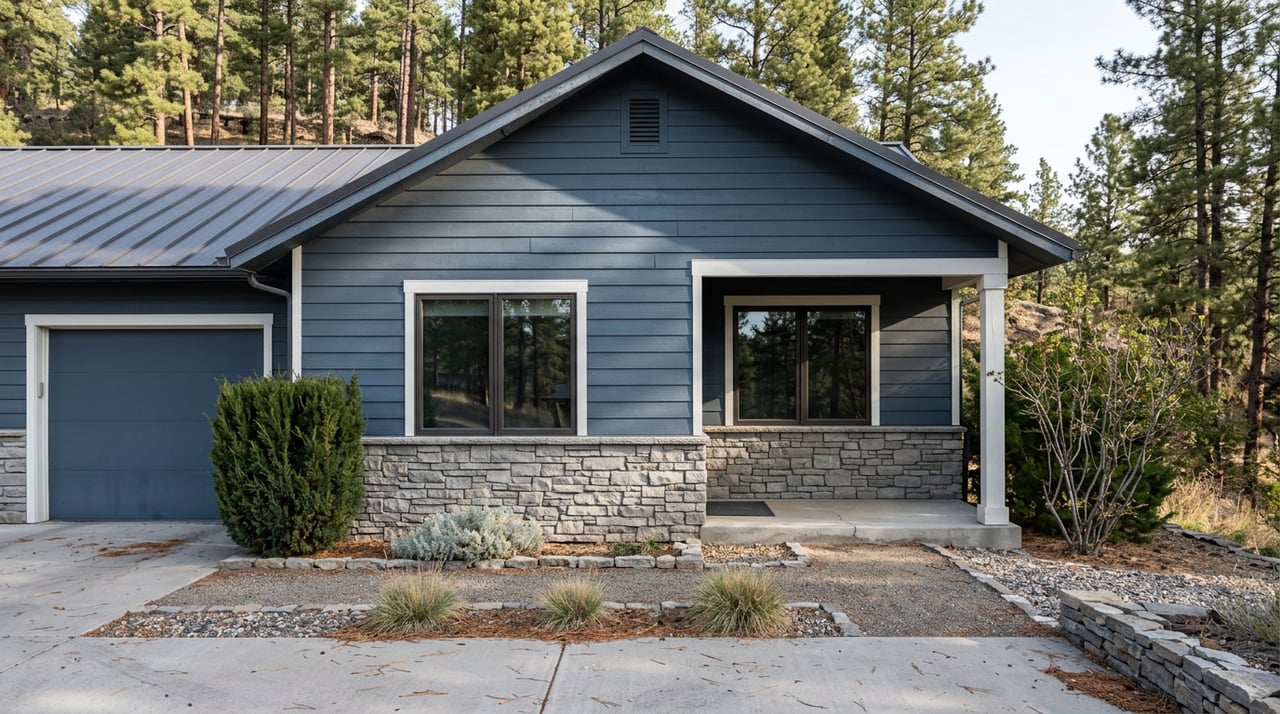
Pull Skyridge condo sales and Skyridge townhome sales apart and you get two neighborhoods pretending to be one. Over the 12 months tracked through August 2026, condos in Skyridge carried a median sale price of $849,225, up 12% from the year before. Townhomes in the same footprint, same view corridor, same distance from Fort Lewis College, carried a median of $792,000, down 7% over that same stretch.
That's not two comparable products drifting apart on sentiment. It's two categories inside one small, boxed-in market, and the reason they can swing that hard in a single year traces back to a water tank agreement the City of Durango worked out in 1985, decades before either building existed.
Two Products, One Zip Code
Durango's citywide numbers already hint at how confusing a blended median can be. Over the three months ending in June 2026, the median sale price across Durango closed at $750,000, up nearly 20% from the same window a year earlier. By August 2026, the citywide median list price had actually settled at $862,000, down about 3% from a year before. Sold prices climbing while asking prices ease off usually means buyers and sellers are trading in different tiers of inventory, not that either number is wrong.
Skyridge's condo-versus-townhome split is a sharper version of that same confusion, and unlike the citywide picture, it has a specific, traceable cause. Zoom out to the county level and the condo and townhome category as a whole has been loosening, not tightening: sales were up roughly a third year over year in July 2026, and in-town Durango is now carrying around six months of supply, more breathing room than buyers have had in recent years. Skyridge's own attached-housing numbers moved in the opposite direction from that loosening trend, at least for townhomes. That mismatch is the tell that something local, not something countywide, is driving the mesa's numbers.
| Skyridge attached housing | Median price (12 months to Aug 2026) | Year-over-year change |
|---|---|---|
| Condos | $849,225 | +12% |
| Townhomes | $792,000 | -7% |
A 1985 Plan Put a Hard Number on This Mesa
In 1985, the first phases of development for what was then the Jenkins family ranch came before the City of Durango for review. Because decisions about that property would shape the rest of the mesa's infrastructure, the city built a precise neighborhood plan around it rather than approving parcels one at a time. That plan, later folded into the broader College Mesa Area Plan and refined through public meetings in 1995, based its land use recommendations on a specific, physical number: the Hillcrest water tank's capacity to serve approximately 1,000 dwelling units on the mesa.
You can read the plan yourself on the City of Durango's site. It names Skyridge's predecessor parcel directly, and it also names Hillcrest Estates by name as one of the areas its recommendations covered. The document even sized the mesa's access roads to that same figure: Goeglein Gulch Road as the extension of College Drive from the south, and North College Drive winding up through a series of hairpin turns from Florida Road on the northeast side. Skyridge itself sits on part of that original Jenkins Ranch land, which is why the plan and the neighborhood share an origin story rather than a coincidence.
A neighborhood built around a fixed utility ceiling behaves differently than one that can keep annexing farmland. It can't quietly add another 200 units when demand rises. Every new unit that lands on the mesa uses up part of a number set four decades ago, not an open-ended supply.
Why a Thin, Capped Market Swings This Hard
Here's the part that explains the condo-and-townhome split without requiring a tidy story about new construction. In an open market with hundreds of annual sales, a handful of unusual closings barely move the median. In a small, capped market like Skyridge's attached-housing pool, where total annual sales are a fraction of that, whichever specific units happen to trade in a given year can swing the category median by double digits, independent of any real shift in what a "typical" home there is worth.
That cuts against the instinct to assume new construction is what's driving the condo number up. Etta Place Townhomes, the mesa's most visible recent construction, is technically a townhome project, not a condo project, so if anything you'd expect new supply to have lifted the townhome median, not the one that fell. The more likely explanation is closer to statistics than to trend: a small number of higher-priced condo sales closed this year, a larger pool of older, smaller townhome resales turned over, and the medians moved accordingly. On a mesa this size, that's not a market losing confidence in townhomes. It's a market too thin to average out.
Where the New Supply Actually Lands
Most of Skyridge's existing stock, including its condos and townhomes, was built in the early 2000s in Craftsman-style architecture with modern mountain or Mediterranean influences. Etta Place Townhomes, designed by Reynolds, Ash + Associates, is the newest wave landing directly into that aging inventory. The development sits along the ridge of Goeglein Gulch Road adjacent to Fort Lewis College, with units completed in late 2025 and additional phases delivered into 2026, pricing in the range of $455 to $469 per square foot with two- and three-bedroom layouts, attached garages, and unobstructed La Plata Mountain views.
Those homes aren't expanding the mesa's ceiling. They're consuming what's left of it. Every unit Etta Place delivers is inventory the 1985 plan already accounted for, not new capacity the water system has to stretch to cover.
The Detached Side of the Mesa Takes a Different Path
Hillcrest Estates, one of the mesa's older single-family enclaves and one of the parcels the original area plan named directly, is answering the same fixed ceiling with a different response. Local listing data for the subdivision describes a neighborhood now in transition, where owners are remodeling and updating existing homes, and in some cases tearing them down entirely to build new floorplans on the same lots.
That pattern makes sense once you see the cap behind it. If the mesa can't grow outward, the only way its detached housing modernizes is by replacing itself in place, one lot at a time. There isn't a comparable per-square-foot trend to report here with confidence, since current single-family sales data for Hillcrest Estates specifically wasn't available at the same level of detail as the attached-housing numbers. What is clear is the mechanism: a capped mesa doesn't get new detached inventory by expanding. It gets it by tearing down what's already there.
What This Means When You're Comparing Two Listings
If you're weighing a Skyridge condo against a Skyridge townhome, or either one against a Hillcrest Estates house, the median for "the neighborhood" won't tell you much on its own. A few questions do more work:
- Is this specific unit part of the original early-2000s buildout, or is it new construction like Etta Place filling in the mesa's remaining allotted capacity? That answers more about pricing than the category median does.
- How many comparable units actually sold in the past year? On a mesa this size, a category median built on five or six sales behaves very differently than one built on fifty.
- What are the HOA dues, and how do they compare across build eras? Newer phases often carry different fee structures than the neighborhood's older attached complexes.
- If you're buying a legacy single-family home with plans to renovate, what have neighboring owners actually done, remodeled in place or torn down and rebuilt? That answer shapes your resale comparison more than any citywide trend line will.
FAQ
Does the 1,000-unit cap mean the mesa will eventually run out of homes for sale? The cap limits the total dwelling units the area was planned to support, tied to water system capacity rather than available land. It doesn't stop turnover. It means growth here comes mostly from replacing or renovating existing units rather than adding new blocks of housing, which is part of why individual sales carry outsized weight in the category numbers.
Why did condos outperform townhomes in Skyridge this year if both are capped by the same plan? The cap explains why the overall pool is small and slow to grow. It doesn't dictate which category rises or falls in a given year, that comes down to which specific units happened to close. In a market this thin, a single unusual sale can move a median more than a genuine shift in value would.
Comparing a capped-supply mesa against the rest of Durango's market takes more than a portal search and a median price. If you're trying to figure out whether a specific Skyridge, Hillcrest, or College Mesa listing is priced against a thin, unusual sales pool or a genuine trend, Alicia Romero at LiveInDurango can walk through the actual unit-by-unit history with you before you make an offer.