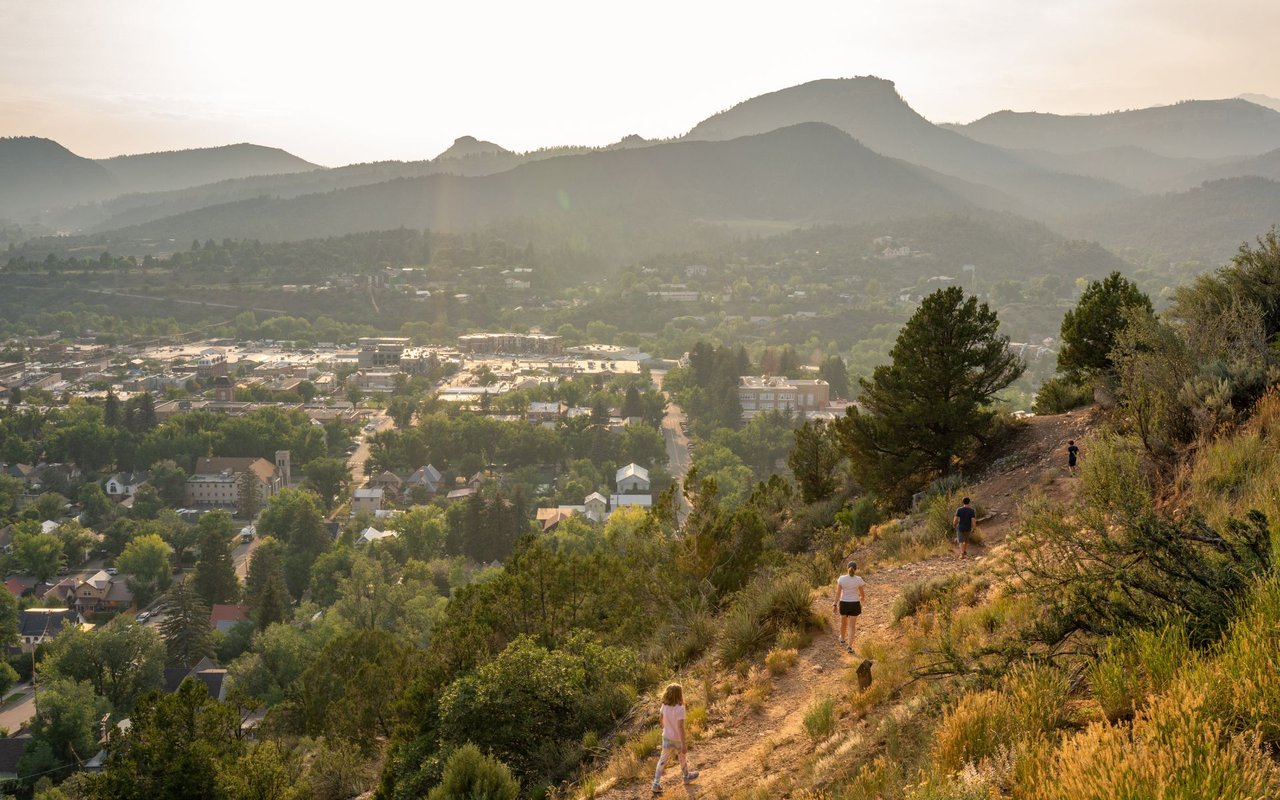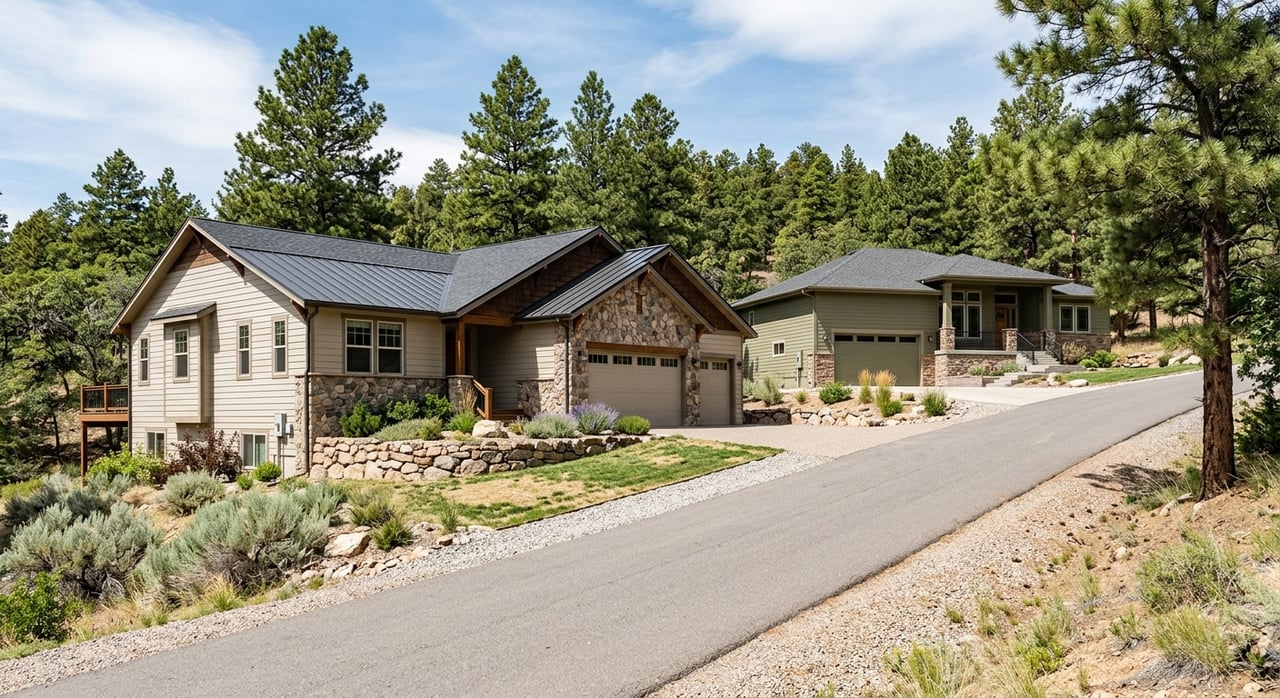
Wondering what it’s really like to live up on the mesa in Durango? If you are comparing neighborhoods and trying to picture your day-to-day life, Skyridge, Hillcrest, and the broader College Mesa area offer a setting that feels different from lower parts of town. You get a more elevated, view-oriented environment, close access to trails, and a residential layout that feels tucked away rather than busy. Let’s dive in.
What defines College Mesa
College Mesa is the broader district that includes Fort Lewis College, Hillcrest Golf Course, land near Goeglein Gulch Road, the city reservoir area, and the slopes that fall toward Florida Road and Raider Ridge. According to the City of Durango’s area plan, it is one of the city’s few partially developed areas, with a mix of public, park, and residential land uses.
That mix helps explain why the mesa feels so distinct. Instead of a tight downtown street grid, you find elevation, wider views, open land, and the presence of the Fort Lewis College campus as part of the backdrop. Fort Lewis College sits on a 247-acre campus at 6,872 feet above downtown, with broad views of the Animas River Valley and the La Plata Mountains.
How Skyridge and Hillcrest feel
Hillcrest has an established residential feel
Hillcrest tends to read as one of the more established residential parts of the mesa. The city describes the area as mostly low-density and view-oriented, with large-lot single-family subdivisions and estate-style homes, including quarter-acre lots in Hillcrest Estates.
This part of the mesa also has a few defining open-space edges. Hillcrest View Park at 222 Hillcrest Drive adds a small neighborhood park, while Hillcrest Golf Club along Rim Drive contributes a broad recreation and open-land buffer. Together, those features give Hillcrest a quieter, more settled feel.
Skyridge feels pocketed and connected to open space
Skyridge has more of a subdivision structure. The city’s open-space plan notes that the subdivision was built with several hundred home sites, Jenkins Ranch Neighborhood Park, and about 184 acres of open space on the Raider Ridge slope.
Local street patterns help shape the feel here too. The Skyridge Connector ends in a cul-de-sac, which reflects how some streets in this area feel more pocketed and residential rather than through-routes. That layout can appeal to buyers who want a neighborhood that feels set apart from busier traffic corridors.
These neighborhoods function as a cluster
Skyridge, Hillcrest Estates, North College Drive, Goeglein Gulch, Sanborn Place, and Ball Lane are often grouped together in city service planning. That is a practical sign that these mesa neighborhoods function as a close set of adjacent residential pockets.
For you as a buyer or seller, that matters. It means the area is best understood as a connected mesa lifestyle zone, even though each pocket has its own street pattern, housing mix, and edge conditions.
Trails are a major reason people choose the mesa
If outdoor access is high on your list, this area stands out. The City of Durango says the community has more than 3,000 acres of open space and more than 100 miles of natural-surface trail, and East Durango’s central trail systems include Fort Lewis College and Horse Gulch.
Fort Lewis trails are close and convenient
The Fort Lewis trail system is relatively short, at under five miles, but it plays an outsized role in mesa living. Access points include Chapman Hill, the SkySteps, and campus connections, and the system includes the Rim Trail and Lion’s Den.
The SkySteps themselves are a 500-step climb, and the Nature Trail links directly to Horse Gulch. For many residents, that kind of direct connection is part of the appeal. You can move quickly from neighborhood streets to dirt trails and open-space routes.
Horse Gulch expands your trail options
Horse Gulch is much larger, with 1,519 acres and 57.2 miles of natural-surface trails. That gives the mesa a strong recreation advantage for buyers who want easy access to hiking, running, or biking terrain.
In practical terms, the trail network here does not feel like an occasional amenity. It feels built into the daily rhythm of the area. That is especially true if you value being able to leave home and get onto a trail system without a long drive.
Skyridge has notable trail connections
For Skyridge specifically, the city’s open-space plan highlights some important connections. The Powerline Trail runs just above the home sites and provides access toward BLM land to the northeast and Horse Gulch to the southwest.
The newer RidgeView trail connects Powerline to Raider Ridge. That trail access is one of the biggest lifestyle draws in Skyridge and helps explain why this neighborhood stands out to buyers looking for outdoor-oriented living.
Mesa access is close, but not the same as downtown
One of the most important things to understand about this area is access. The mesa is close to downtown Durango, but it does not function like a pass-through district.
The College Mesa plan says Goeglein Gulch and College Drive are the primary access route. North College Drive reaches the mesa through hairpin turns in a residential area, and Eighth Avenue is steep, narrow, and can be closed during heavy snow.
Roads feel local, not arterial
The same city plan notes that neither North College Drive nor the south end of Goeglein Gulch Road is suited to high volumes of through traffic. That shapes the neighborhood experience in a big way.
If you live here, the roads tend to feel more local and destination-oriented. For many buyers, that is a plus because it supports a quieter residential setting. At the same time, it is smart to understand that the street network is more topographically constrained than lower parts of Durango.
Winter conditions matter on the mesa
Seasonality is part of mesa living. Because of the elevation and the nature of the access roads, winter travel can feel different here than in flatter, lower areas.
That does not make the mesa inaccessible, but it does mean you should think practically about your comfort with steeper roads, hairpin turns, and snow conditions. For relocation buyers especially, this is one of the most useful quality-of-life details to understand early.
How mesa living compares with downtown Durango
The mesa and downtown offer very different experiences. Downtown is shaped by a more connected urban pattern, while the mesa is physically separated by elevation and defined more by open space, residential pockets, and trail access.
The city describes the Animas River Trail as the primary community corridor linking the north, downtown, and south parts of town. By contrast, the mesa’s identity is tied more closely to Fort Lewis College, Horse Gulch, Raider Ridge, and the elevated terrain itself.
If you are deciding between the two, the question often comes down to lifestyle fit. Do you want to be in a more walkable central area, or do you prefer a neighborhood that feels more open, residential, and directly tied to trails and views?
What buyers often like most here
For many buyers, the mesa’s appeal comes down to a few clear strengths:
- Elevated setting with broad views
- Close proximity to Fort Lewis College
- Direct access to open space and trail systems
- Low-density residential character
- Streets that feel more tucked away than busy
These features can be especially appealing if you are relocating to Durango and want a neighborhood with a strong outdoor identity. They can also resonate with second-home buyers who value scenery and recreation access over being in the center of downtown activity.
What to keep in mind before you buy
Every neighborhood has trade-offs, and the mesa is no exception. The same elevation and topography that create views and trail access also shape how you move through the area.
Before you buy, it helps to consider:
- How comfortable you are with steeper access roads
- Whether winter driving conditions are a concern for you
- How important trail access is in your daily routine
- Whether you prefer pocketed residential streets or a more connected street grid
- How close you want to be to downtown’s core services and activity
Those questions can help you decide whether Skyridge, Hillcrest, or another part of Durango best fits your lifestyle.
Why local guidance matters on the mesa
On paper, several Durango neighborhoods may look similar. In real life, small differences in access, lot orientation, trail adjacency, and street layout can have a big impact on how a home feels.
That is where neighborhood-level guidance becomes valuable. When you are weighing mesa living against downtown or other in-town areas, it helps to work with someone who can walk you through the practical differences, not just the map.
If you are exploring Skyridge, Hillcrest, or College Mesa and want help comparing the feel, access, and lifestyle fit of each area, Alicia Romero can help you make your move with clear, local insight.
FAQs
What is College Mesa in Durango?
- College Mesa is the broader mesa district above downtown Durango that includes Fort Lewis College, Hillcrest Golf Course, nearby residential areas, and surrounding open-space edges.
What is Skyridge like in Durango?
- Skyridge is a subdivision-style mesa neighborhood with several hundred home sites, neighborhood park space, nearby open space on the Raider Ridge slope, and trail connections near the homes.
What is Hillcrest like in Durango?
- Hillcrest is generally known for low-density, view-oriented residential development, including larger lots and an established neighborhood feel with nearby park and golf course amenities.
Are there trails near Skyridge and College Mesa?
- Yes. The area has direct access to the Fort Lewis trail system, connections into Horse Gulch, and Skyridge-specific access via the Powerline Trail and RidgeView trail.
Is College Mesa close to downtown Durango?
- Yes, the mesa is close to downtown, but it feels more separated because of the elevation, access roads, and more residential, open-space-oriented setting.
What should buyers know about mesa access in Durango?
- Buyers should know that access roads to the mesa can include steeper grades, hairpin turns, and winter travel considerations, which makes the area feel different from lower-elevation neighborhoods.